
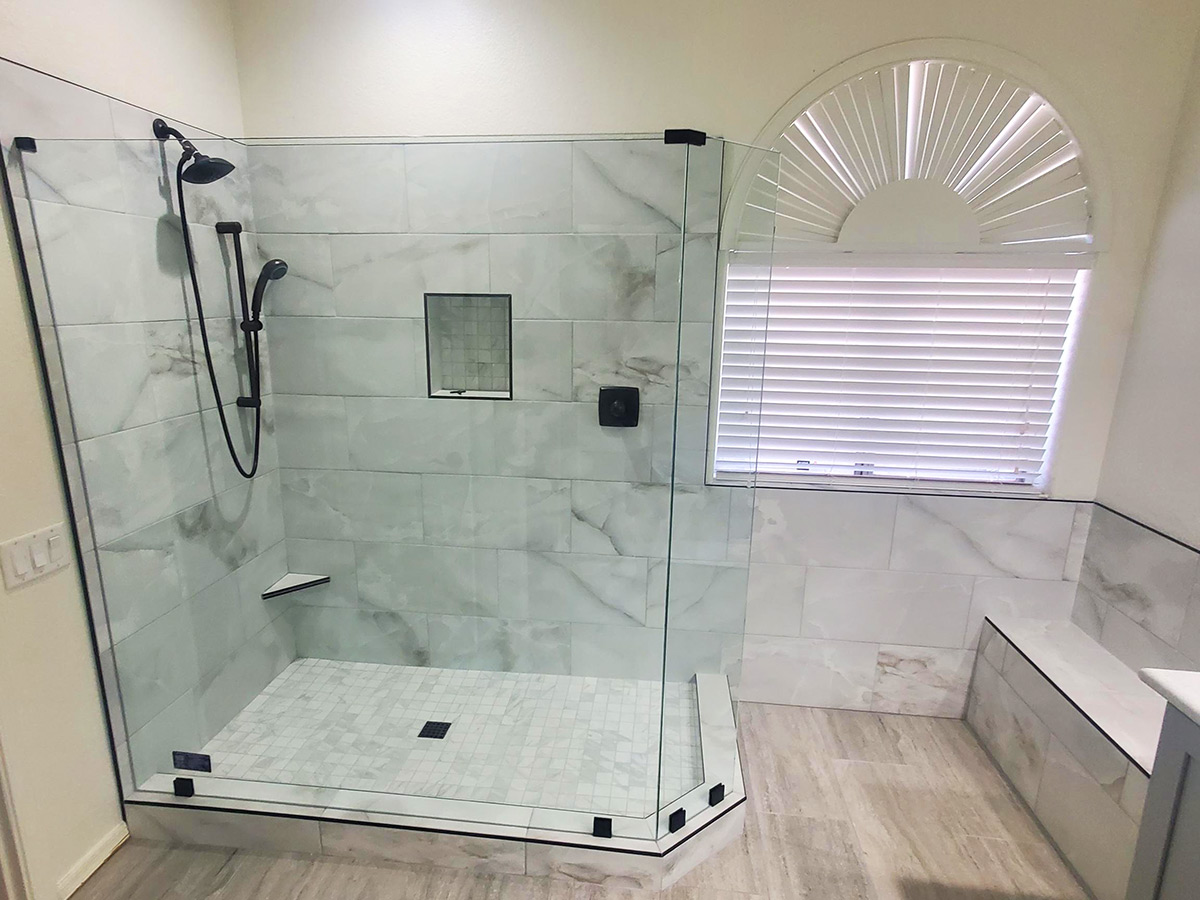
Let’s take a look at the benefits of installing frameless shower doors and how they differ from framed doors.
What Are Frameless Shower Doors?
The main reason homeowners install frameless shower doors is because they can offer better fit, function, and form. Most pivot hinges allow the doors to open both inward and outward from inside and outside the shower.
This is quite an upgrade from framed doors that can only be opened to the outside. Homeowners often choose this glass option because it features no metal edges, gaskets, or frames to collect water, which allows the potential formation of mold or mildew.
Frameless glass is heavy, making use of clips and clamps for proper installation and function. Even with the added weight and thickness, frameless glass offers many desirable designs and finishes. It will also give your shower a larger appearance overall.
Frameless Shower Door Benefits
There are several advantages of frameless shower door installations. This glass is much easier to keep clean with no mildew growth due to gaskets and frames.
When remodeling, homeowners usually opt for the higher quality hardware and thick tempered glass that come with this option.
Framed Vs Frameless Shower Doors
Both framed and semi-frameless glass are often referred to as low quality with a shorter lifespan overall. Oftentimes, these doors are mass produced using inexpensive and inferior materials.
DIY remodelers ultimately choose framed doors for their ease of installation. These doors are not made custom so they will not provide a perfect fit, at all times.
How To Measure For A Shower Door Installation
Knowing the exact height of the door is the first step of this process. Next, you’ll want to measure and record the width at the bottom, middle, and top. Checking the plumbness of the walls is the last step.
Use this quick guide to measure your shower door.
Step 1. Determine The Height
- You should always figure out the height of the door before the width.
- Measure to the top of the tile if you have a tile surround.
- If you happen to have a vinyl surround, you might have to measure all the way to the ceiling.
- Determine which way you’ll want the door to either slide or open.
- Many shower doors these days are reversible but not all.
Step 2. Measure The Width
- From the tile or acrylic, use a tape measure to figure out the width at the bottom of the shower opening.
- Do this to the middle and top of the door, as well.
- When measuring the bottom, place the tape measure just above the bottom shower curb.
- The top measurement should be near the top of the door, yet never beyond the wall tile.
Step 3. Inspect Plumbness
- Once all measurements are recorded, check the door opening for plumbness.
- This essentially means the ‘straightness’ of the wall.
- If your shower wall is not plumb, but crooked, it can impact the installation process.
- A bubble level is the best tool to analyze width measurements.
- Older homes typically feature an upper shower area with a larger width than near the curb.
Step 4. Choose Proper Door Width Size
- If the walls are plumb and the width measurements remain the same, use this as your width dimension.
- If this is not the case, you’ll need to order a shower door that allows for ‘out of plumb’ installation.
- You should choose the shower door with your largest width measurement.
Home Renovations By Allure Bathroom Remodeling
Allure Baths and Kitchens offers bathroom remodeling and shower remodeling throughout the entire local Phoenix, AZ Valley area including: Phoenix, Scottsdale, Cave Creek, Carefree, Glendale, Peoria, Surprise and more. Get a free bathroom remodel quote by contacting us today.